
The Engagement Gap — Why Participation Alone Is Not Enough
Introduction: The Illusion of Engagement
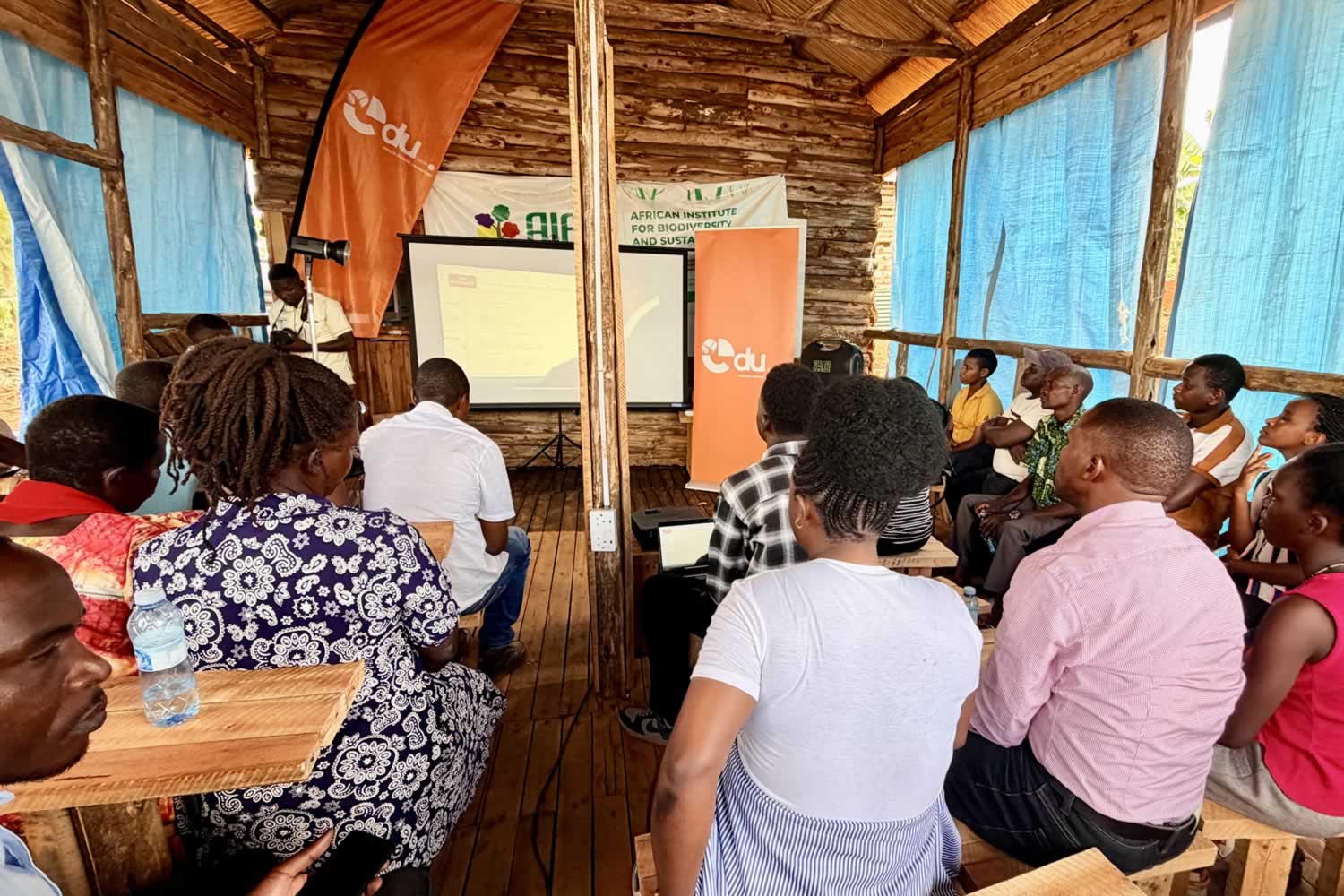
Across the development sector, community engagement has become a central pillar of program design. Organizations convene workshops, facilitate dialogues, conduct outreach campaigns, and bring people together in meaningful ways. Participation is often high, conversations are rich, and the immediate outcomes appear promising.
But beneath this activity lies a critical gap.
Engagement is happening, but it is not always translating into usable, credible, or actionable evidence.
Too often, the depth of community interaction is lost once the moment passes. What remains are summaries, attendance sheets, and generalized insights that struggle to capture the full picture of what truly occurred.
This raises an important question:
If engagement is not effectively captured and translated into insight, can it truly influence impact?
The Reduction of Human Experience
Traditional Monitoring and Evaluation (M&E) systems are built for structure and accountability. They rely on:
- Indicators
- Metrics
- Targets
- Reporting frameworks
These tools are essential. They allow organizations to measure reach, track outputs, and demonstrate results. However, they also introduce a fundamental limitation: they simplify complexity.
Human experiences especially those shaped by culture, belief systems, and social dynamics cannot always be reduced to numbers without losing meaning.
Consider a community dialogue on health awareness:
- Attendance might be recorded as 150 participants
- A report might note “increased awareness”
- Indicators might show improved knowledge levels
But what is missing?
- The hesitation in people’s voices
- The misconceptions that surfaced
- The emotional responses to lived experiences
- The moments of realization that signaled true change
These elements are not easily captured in traditional systems, yet they are often the most important drivers of transformation.
When Engagement Becomes a Checkbox
In many cases, engagement risks becoming procedural:
- Conduct the session
- Record attendance
- Document key points
- Move on
This approach treats engagement as an activity to be completed, rather than a process to be understood.
The consequence is significant:
- Insights are shallow
- Learning is limited
- Programs miss opportunities to adapt in real time
Most importantly, communities remain heard but not fully understood.
The Disconnect Between Experience and Evidence
At the heart of the problem is a disconnect between:
- What communities experience
- And what organizations report
This disconnect creates several challenges:
1. Incomplete Understanding of Impact
Programs may appear successful on paper while missing underlying issues or nuances that affect long-term outcomes.
2. Delayed Learning
Insights often emerge only at the end of a project cycle, limiting the ability to adapt during implementation.
3. Weak Feedback Loops
Communities share their perspectives, but these insights are not always systematically captured or fed back into decision-making.
Why This Gap Matters Now
The development landscape is evolving. There is increasing emphasis on:
- Accountability
- Transparency
- Community ownership
- Adaptive programming
In this context, the ability to capture and interpret engagement effectively is no longer optional but essential.
Organizations need more than participation metrics. They need:
- Depth of insight
- Contextual understanding
- Real-time learning
Without this, engagement risks becoming performative rather than transformative.
Reframing the Role of Engagement
To address this gap, we must shift how we think about community engagement.
From:
A one-time activity
To:
A continuous source of evidence and learning
This requires reimagining engagement as:
- A space where data is generated
- A process where insight is captured in real time
- A system that feeds directly into decision-making and adaptation
Towards a New Approach
The question is not whether engagement is happening.
The question is whether we are:
- Capturing it effectively
- Interpreting it meaningfully
- Using it to inform action
Bridging this gap requires moving beyond traditional methods and embracing approaches that:
- Value qualitative insight alongside quantitative data
- Capture lived experiences as they unfold
- Treat communities as contributors to evidence, not just participants
Conclusion: Setting the Foundation
Community engagement remains one of the most powerful tools in development work. It creates connection, builds trust, and opens space for dialogue.
But its true value lies not just in the moment of interaction, but in how that moment is captured and used.
In Part 2 of this series, we explore how integrating Monitoring, Reporting, and Verification (MRV) directly into engagement processes transforms participation into real-time, credible evidence.
Author: Educinema Initiative Comms